
How We Verify Precious Metals
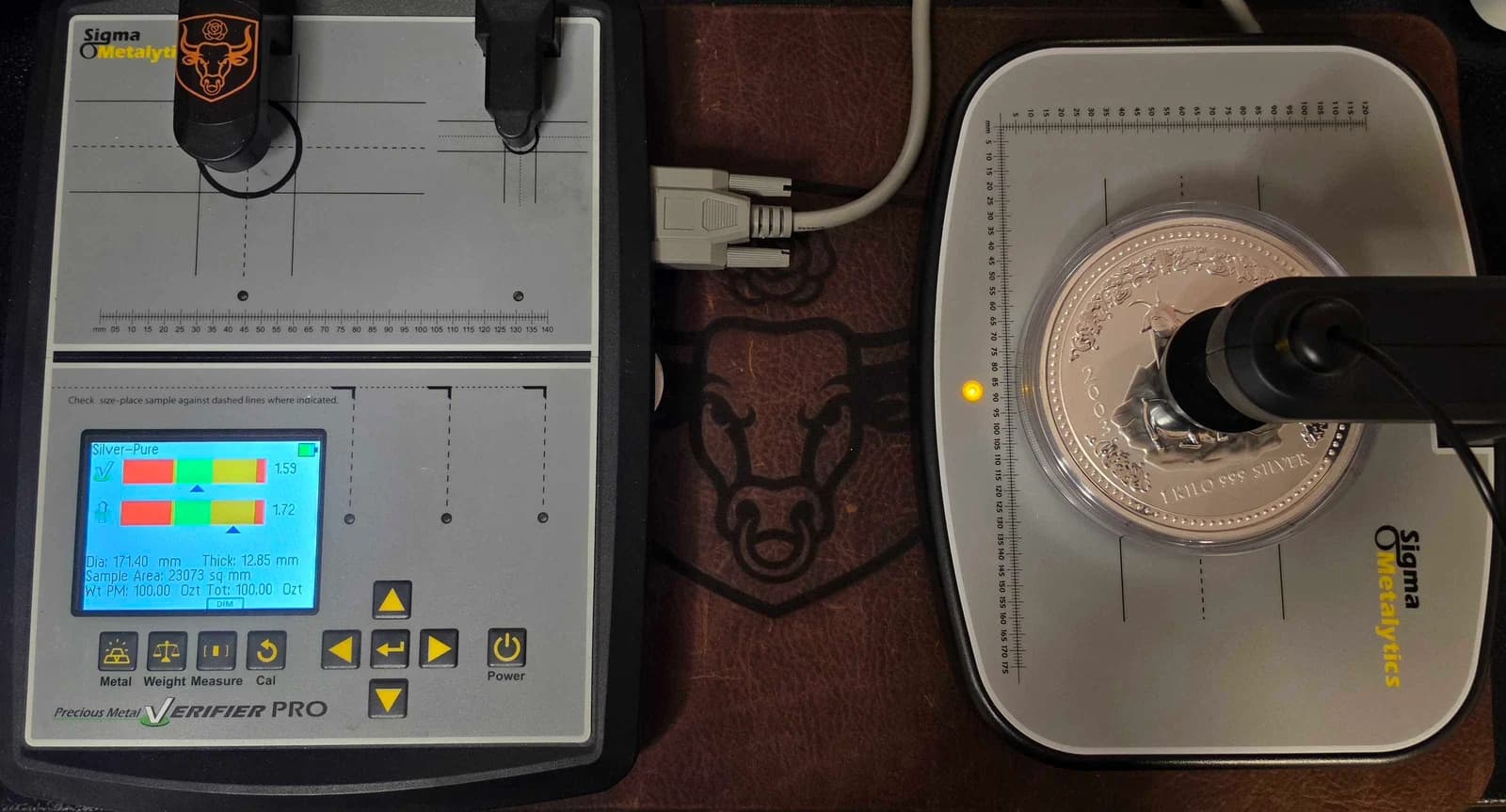
Every item is evaluated using the appropriate combination of verification methods for its type, value, and construction. Our in-house Sigma Pro with bridge, physical inspection and other suitable tests help us cross-check the evidence.
Our Core Verification Process
No single test reliably identifies every counterfeit. We choose checks that complement one another and explain what the results can and cannot establish.
Inspect
Check hallmarks, weight, dimensions, construction and condition against known specifications.
Test
Choose suitable electronic, electromagnetic, acid or physical checks for the item.
Cross-Check
Compare independent observations. A single reassuring reading does not settle an inconsistent result.
Escalate When Needed
Discuss inconclusive results and any additional testing, partner analysis or seller authorization needed.
How We Test — Used In-House
Our equipment supports an item-specific assessment. We select suitable methods and interpret the results together.
Available Through Partners
When a result remains inconclusive or a lot needs further analysis, we discuss referral to an appropriate refining or assay partner. XRF and melt/assay analysis are separate from our in-house Sigma testing.
XRF assesses elemental composition at the tested surface; that result alone does not establish the composition throughout a plated or filled item. Access, suitability and any sampling requirements are agreed for the specific piece.
Ask Giovanni which checks are appropriate before bringing or shipping an unusual or high-value item.
Supporting Checks
These observations can support an assessment. Their usefulness depends on the item, and none independently establishes authenticity.
Magnetism
Magnetic response can flag an unexpected material, but lack of attraction does not establish that an item is precious metal.
Dimensions
Compare diameter, thickness and construction with the appropriate mint or manufacturer specifications.
Specific Gravity
Density can provide supporting evidence on suitable items. Stones, cavities and mixed materials can make the result difficult to interpret.
Visual Inspection
Examine hallmarks, edge details, strike, finish and wear with magnification. A convincing mark or appearance is only one part of the assessment.
Sound & Resonance
A freely vibrating, suitable coin can be compared with a known reference. Holders, wear and damage affect the result; this is a supporting check, not proof.
Destructive vs Non-Destructive Testing
Non-destructive testing is our starting point when practical. We explain any proposed testing that could alter your item and obtain your authorization before proceeding.
Non-Destructive
Inspection, measurements and suitable Sigma or electronic tests can help assess an item without cutting or melting it. We choose methods that suit its condition and construction.
Best for: coins, bullion, jewelry, slabs, and any item the seller intends to keep or resell intact.
Destructive
Cutting, filing, drilling, stone removal and melting can permanently change an item. These are discussed separately and require the seller’s authorization. Refusing a test may mean we cannot make a verified offer.
Best for: selected scrap lots or inconclusive material when the proposed method and consequences have been agreed. Collector pieces require particular care.
When Testing Becomes Settlement
For some mixed, plated or difficult-to-test scrap lots, individual surface readings cannot establish the recoverable metal content. An agreed refinery settlement can use melt and assay instead.
- Step 1
Melt
With authorization, suitable material is melted and homogenized for sampling.
- Step 2
Assay
The refiner samples and analyzes the material using methods appropriate to the lot and settlement arrangement.
- Step 3
Settle
The agreed settlement uses the reported precious-metal content and applicable refining terms and charges.
For transactions arranged around refinery settlement, we explain the applicable terms and provide the assay or settlement information used to calculate the payment. Discuss suitability, timing and authorization with Giovanni before proceeding.
Graded & Slabbed Coins
Opening a graded holder can affect the certification and collector value, so we take particular care with slabbed coins. We inspect both the coin and holder, check certification details directly with the grading service, and use suitable non-invasive checks.
Sigma testing can be appropriate through a non-metallic holder when the sample and sensor setup permit it. We do not treat XRF through a plastic slab as a substitute for a suitable direct surface analysis.
A valid certification number or QR code does not prove that the coin or holder is genuine. Compare the item with the grading service’s official record and investigate inconsistencies.
Why Authenticity Matters
Counterfeits today aren't the obvious painted-lead fakes of decades past. Modern fakes are produced with real precision: tungsten cores plated to exact gold thickness, struck from authentic-looking dies, sealed in counterfeit slabs with QR codes pointing to look-alike landing pages.
For buyers, that means a single missed verification can cost thousands of dollars. For sellers — even honest ones — it means a piece passed down from family can turn out to be a fake the family didn't know they had.
Verification isn't paranoia. It's the price of trust in this market.
Resources for Collectors & Stackers
A short list of tools and references we trust.
PCGS — Verify Cert Number
Compare certification details with the official PCGS record; a matching number alone does not authenticate a slab.
NGC — Verify Cert Number
Same thing, for NGC-graded coins. Always verify on the official site, never via a QR code on the slab.
American Numismatic Association
Educational resources, grading guides, and a directory of trusted dealers.
Sigma Metalytics — Tester Information
Manufacturer site for the Sigma family of verifiers. Read the manufacturer’s guidance on suitable samples, setup and limitations.
A note on home testing: the tools listed in this guide are excellent first lines of defense, but no single home test is foolproof. For unusual or high-value items, ask a qualified professional to explain the appropriate checks and any remaining uncertainty.
Schedule a visit or mail it in. We'll verify it.
Schedule a private appointment or use our mail-in service. Every item is evaluated using the appropriate combination of verification methods for its type, value, and construction.